

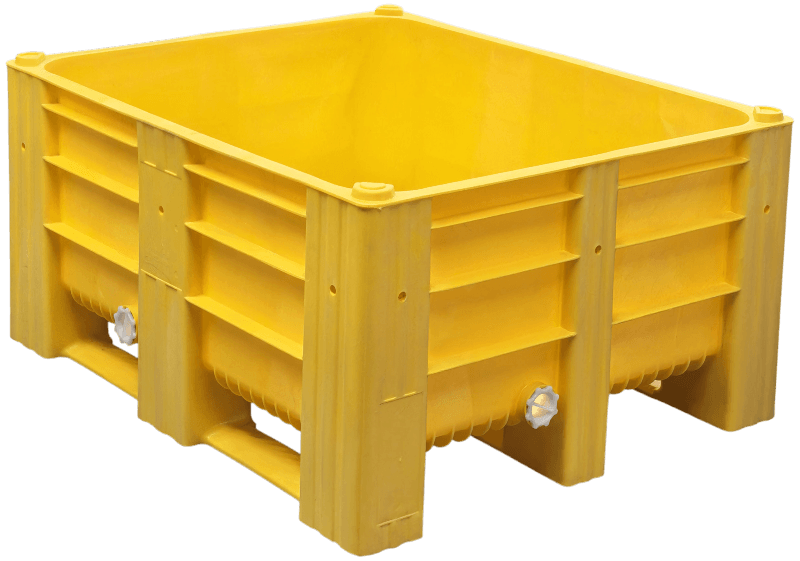
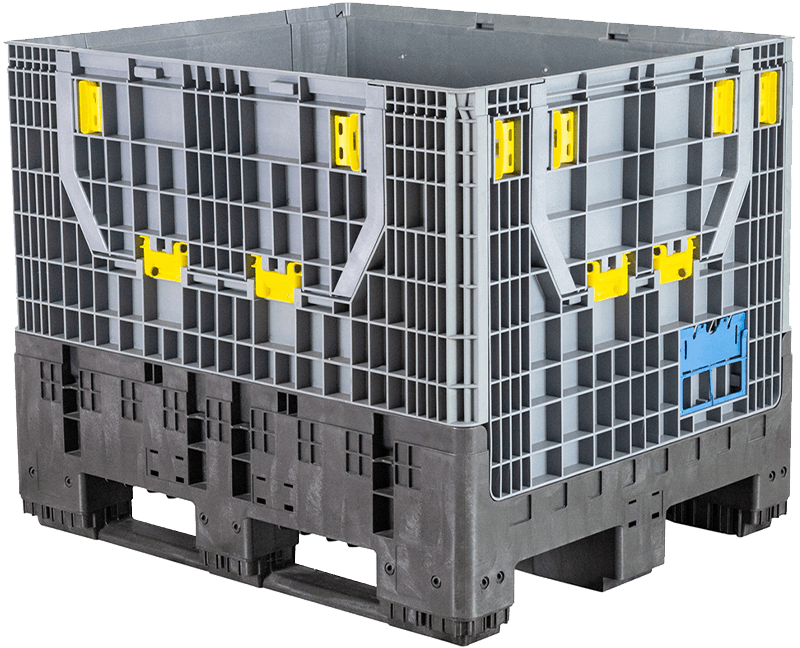
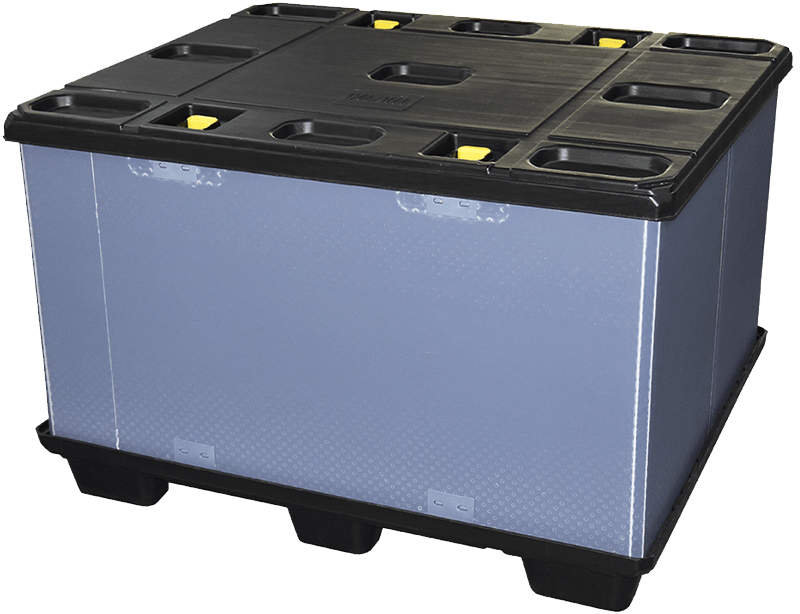
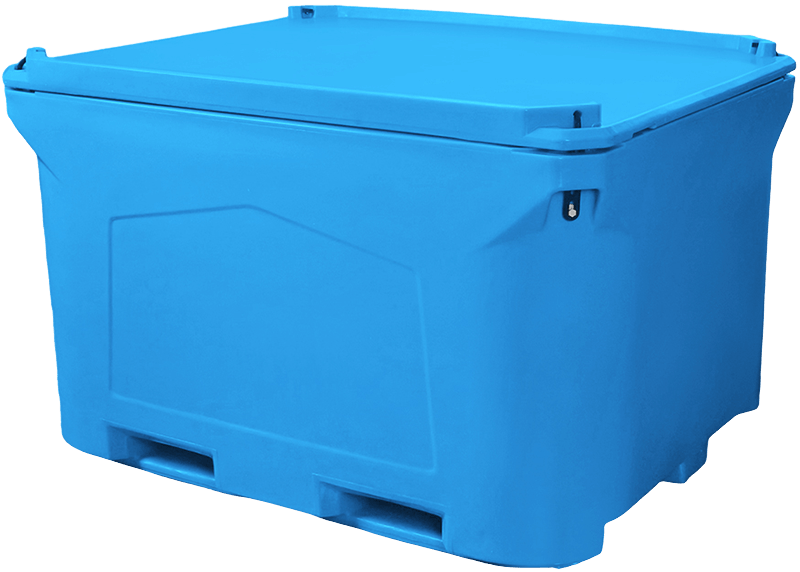
A pallet that works for one region or industry may create inefficiencies in another simply because the surrounding infrastructure was designed around different standards.
This is why standard pallet dimensions matter. Warehouses, forklifts, pallet jacks, and other equipment and systems are built around specific pallet footprints. Using standard pallet sizes helps to reduce wasted space, support load stability, streamline handling, and improve supply chain compatibility. It also promotes safety by minimizing the risk of overhang, shifting, and handling accidents during storage and transport. For facilities and supply chains everywhere, standardized pallets are key to efficient product circulation.
Global logistics relies on several main pallet sizes. In North America, the 48” by 40” pallet is standard. In Europe, the main go-to pallet is 1200 × 800 mm. Much of Asia depends on 1100 × 1100 mm and 1200 × 1000 mm pallets. Australia operates around its own 1165 × 1165 mm standard designed for regional rail systems.
Each of these pallet dimensions reflects the transportation networks, warehouse infrastructure, and handling practices commonly used in those regions.
ISO Pallets
The International Organization for Standardization (ISO) recognizes 6 pallet dimensions commonly used in global logistics networks. Rather than enforcing a single worldwide pallet size, these standards acknowledge that regions have different transportation networks, distribution environments, and product handling practices.
ISO pallet standards reduce friction in international trade by pinpointing pallet dimensions that are commonly accepted in global transportation and storage systems. Such standards improve compatibility in:
- Shipping containers
- International freight systems
- Warehouse racking
- Automated handling equipment
- Regional transportation networks
- Cross-border logistics operations
Nowadays, businesses follow ISO-recognized pallet specifications to support their global manufacturing, transportation, and warehouse storage operations. By adhering to those standards, companies can simplify and improve regional and international expansion.
| Dimensions in inches | Dimensions in mm | Wasted floor space in 40’ISO container | Region most used in |
| 48×40 | 1219×1016 | 3.7% | North America |
| 42×42 | 1067×1067 | 11.5% | North America, Europe, Asia |
| 47.24×39.37 | 1200×1000 | 6.7% | Europe, Asia |
| 47.24×31.5 | 1200×800 | 15.2% | Europe |
| 45.9×45.9 | 1165×1165 | 8.1% | Australia |
| 43.3×43.3 | 1100×1100 | 14% | Asia |
North America Pallet Sizes
Throughout North America, the 48”× 40” pallet is the standard in many industries, from retail to grocery to consumer goods and beyond. Still, several other pallet sizes are used for industrial manufacturing, chemicals, agriculture, beverage logistics, and automotive supply chains.
48”× 40” Pallet
Of all North American pallet sizes, the 48”× 40” pallet is the most widely preferred option. It’s also the benchmark for most of the global pallet industry. It has been adopted by the Consumer Brands Association (CBA), formerly known as the Grocery Manufacturers Association (GMA), and is the standard pallet size for a large portion of consumer packaged goods moving through U.S. and Canadian supply chains.
This pallet size will fit standard North American warehouse racking, trailers, forklifts, and pallet jacks without reconfiguration. Because of its widespread use, many automated warehouses and logistics systems have been tailored to the 48” × 40” pallet.
42”× 42” Pallet
Companies across North America choose the 42”× 42” pallet for industrial loads that require a stable, evenly distributed footprint during storage and transport. This size has square dimensions (length and width are equal), which makes it ideal for drums, pails, and other containerized products that aren’t suited to narrower pallet formats.
Businesses use this pallet size in these areas:
- Chemical processing
- Paint manufacturing
- Industrial coatings
- Telecommunications equipment distribution
In environments like these, load stability often takes priority over maximizing trailer space. This is especially important when handling heavier products that can shift under repeated forklift movement or long transport cycles.
48”× 48” Square Pallet
The 48”× 48” pallet is ideal for transporting and storing high-weight industrial loads. It can hold four 55-gallon drums without any overhang. Its square footprint allows for more even weight distribution than narrower pallet formats. Businesses regularly use them for drums, bulk bags, and dense containerized products.
This pallet size is beneficial when products are heavy, difficult to stabilize, or stored in big containers. Organizations operating in the chemical, resin, or beverage space often use it.
48”× 42” Pallet
Businesses throughout North America use the 48” × 42” pallet for wider case configurations that extend beyond a standard 48” × 40” pallet footprint. Beverage producers and industrial manufacturers select this size when fully square pallet widths don’t provide enough load support, and a full square pallet would create unnecessary space loss.
The extra width improves load support for bottled products, packaged materials, and oversized cartons while remaining compatible with most North American trailers and warehouse systems.
Companies that do business in the following areas use the 48” by 42” pallet: beverage bottling operations, packaging material distribution, industrial manufacturing, and automotive component transport.
40”× 40” Square Pallet
The 40”× 40” pallet has become established in operations surrounding dairy and food processing. That is because its square footprint is well-suited to stackable crates, ingredient containers, and intermediate food packaging. In comparison to longer pallet formats, the 40” × 40” size offers more stable load geometry for refrigerated transport and compact storage environments. It’s also easier to maneuver in processing facilities with tight aisles.
Organizations regularly use this pallet for:
- Dairy distribution
- Food ingredient handling
- Agricultural processing
- Bakery and beverage production
48”× 36” Pallet
The 48” by 36” pallet is often used for products that don’t require the full width of a 48”× 40” pallet. Paper manufacturers utilize this format to minimize unused pallet space and retain compatibility with standard handling equipment. Even small dimensional reductions boost trailer utilization across high-volume shipments.
The most common application for this pallet size is paper goods transport and storage. But this format can also be used for packaged food, retail distribution, and beverage packaging.
36”× 36” Square Pallet
For smaller unit loads, compact packaging configurations, and specialty manufacturing applications, this pallet is a good option. When a full-size pallet would waste floor space or trailer capacity, businesses should consider the 36 by 36 configuration.
Frequent applications for this pallet include:
- Beverage containers
- Specialty manufacturing
- Smaller retail shipments
- Food processing
- Mixed SKU distribution
- Compact storage environments
This pallet’s smaller footprint is useful in facilities handling lighter products, low scale production runs, or mixed inventory loads requiring flexible storage arrangements.
48”× 45” Pallet
Companies operating in the automotive manufacturing industry regularly use the 48” × 45” pallet instead of the 48 by 40 or other standard pallets. Supply chains in this sector thrive on standardized container dimensions across production facilities and supplier networks.
Automotive operations frequently move materials through conveyors, robotic work cells, automated storage systems, and sequenced delivery lines. In these environments, even small dimensional inconsistencies can disrupt positioning accuracy or handling flow.
Common applications include:
- Automotive parts distribution
- Returnable packaging systems
- Manufacturing assembly lines
- Robotic handling operations
- Sequenced production logistics
48”× 20”Half Pallet
Designed for retail-ready distribution and in-store merchandising, the 48”× 20” half pallet is a go-to option for promotional products, seasonal inventory, and consumer goods that need to move quickly from the distribution center to the sales floor.
Compared to larger pallets, like the 48 by 40 or the 48 by 45, this one has a very small footprint. It allows stores to replenish inventory without allocating space to a full pallet load. This is particularly useful in convenience stores, pharmacies, and high-density retail environments where floor space is limited.
40”× 24”Half Pallet
The 40” × 24” half pallet is another retail-focused format derived from the standard 48” × 40” pallet system. It works better than larger pallets for mixed SKU shipments, smaller replenishment loads, and aisle-ready displays.
Euro Pallet Sizes
Europe uses metric pallet dimensions built around the EUR pallet system, which is managed by the EPAL. These pallet standards were developed alongside European freight infrastructure, so trailer dimensions, warehouse layouts, and many distribution systems across the region are designed with Euro pallet footprints at the forefront.
Several Euro pallet sizes also align with ISO-recognized standards, which is one reason they are used in both regional and international freight movement.
EUR / EUR1 – 800 × 1200 mm
The EUR1, often referred to as the “Euro” pallet, is the standard pallet size used by European businesses. Its dimensions allow two pallets to fit side by side inside many European trailers while minimizing unused space. This is one of the main reasons this pallet format has become the dominant regional pallet size.
This format is heavily integrated into European retail and warehouse operations, including automated storage systems and conveyor networks.
The most routine applications for these pallets include:
- Retail distribution
- Consumer packaged goods
- Food and beverage logistics
- Pharmaceutical distribution
- General manufacturing
EUR2 – 1200 × 1000 mm
The EUR2 pallet offers more surface area than the EUR1 pallet. It’s for larger or heavier items that won’t fit on the standard EUR1 pallet.
Manufacturers and exporters often use this size for bulk packaging, industrial equipment, and high-volume shipments where additional load support is necessary. Since this pallet is also an ISO-recognized pallet dimension, companies use it in international freight operations moving between Europe and other global markets.
Businesses find these pallets useful for industrial manufacturing, beverage transport, bulk packaging, export logistics, and industrial warehousing.
EUR3 – 1000 × 1200 mm
The EUR3 and EUR2 pallets have the exact same dimensions, but they have different deck configurations and orientations.
Typical applications for the EUR3 pallet include, but aren’t limited to:
- Industrial equipment
- Manufacturing materials
- Bulk goods
- Export shipments
- Industrial warehousing
Compared to the EUR2 design, the EUR3 pallet typically uses fewer top deck boards, which slightly changes its load characteristics and preferred applications. Although the EUR2 pallet is the most appropriate option for heavier loads, both pallet formats complement European logistics networks.
EUR6 – 800 × 600 mm Half Pallet
The EUR6 pallet is a half-size Euro pallet used in retail distribution and promotional merchandising. Products shipped on EUR6 pallets can be moved directly from the truck to the sales floor. There’s usually no need to repalletize or break down the load.
Because of its smaller footprint, workers can easily position these pallets in narrow aisles and compact retail environments.
These pallets are typically used for:
- Retail displays
- Beverage promotions
- Seasonal inventory
- Convenience store distribution
- Fast-moving consumer goods
600 × 400 mm Quarter Pallet
European businesses typically use this pallet for point-of-sale displays and smaller retail produce presentations. Retailers place them directly onto the sales floor for promotional inventory and impulse-purchase items.
These pallets’ compact size works well in supermarkets, pharmacies, and convenience stores, where display flexibility is important.
Common applications for the 600 × 400 mm quarter pallet include:
- Retail promotions
- Small packaged goods
- Point-of-sale displays
- Consumer product merchandising
400 mm × 300 mm Pallet
The 400 mm × 300 mm pallet is an ultra-compact format that businesses use for lightweight retail products and small promotional presentations – more specifically, retail cosmetics, pharmacy displays, and specialty consumer goods.
UK Pallet Sizes
The standard UK pallet size measures 1200×1000 mm which is 25% larger than the 1200×800 mm Euro standard pallet.This size integrates with most UK warehouse racking, trailers,forklifts,
conveyor, and automated handling systems.
However,in the United Kingdom, companies utilize several different pallet dimensions that align with both domestic freight requirements and trade with continental Europe. The most commonly used pallet sizes in the country are the 1200 × 1000 mm, 1200 × 800 mm, 1200 × 1200 mm, and 800 × 600 mm formats.
Pallet selection in the UK usually depends on where goods are being shipped. Companies that are moving freight between the UK and Europe choose pallet sizes that are compatible with warehouse systems and transportation equipment in both markets.
Asian Pallet Sizes
Pallet sizes used across Asia vary by country, but two formats dominate a large portion of the region: 1200 × 1000 mm and 1100 × 1100 mm. In Asia, pallet standards have been tailored to export manufacturing and containerized shipping. Therefore, pallet dimensions are selected based on factors like container efficiency and compatibility with international logistics, instead of domestic transportation alone.
1200 × 1000 mm Pallet
The 1200 x 1000 mm pallet size is the preferred option for manufacturing and export operations, as it aligns with major ISO pallet standards. The pallet’s dimensions work well for businesses that need to load containers or move freight internationally. Exporters often use them to ship products to Europe, North America, and other global markets.
Use cases for this pallet include:
- Export manufacturing
- Industrial production
- International shipping
- Industrial warehousing
- Consumer goods distribution
1100 x 1100 mm Square Pallet
Companies throughout Japan, South Korea, and nearby Asian markets use the 1100 x 1100 mm pallet. Its square footprint accommodates a wide range of industrial and consumer goods, and its even dimensions help distribute load weight consistently across all four sides. Although this pallet size is not one of the primary ISO-recognized dimensions, it is embedded in the Asian logistics infrastructure.
Australian Standard Pallet
Australia’s standard pallet measures 1165 x 1165 mm. Unlike most global pallet standards, which were developed around road transport or shipping containers, the Australian pallet was built specifically for Australia’s domestic rail freight system. Its perfect square footprint is well-suited to the country’s long-haul logistics environment.
Railways play a significant role in Australian logistics, connecting major cities and regional distribution hubs across vast distances. This pallet size was designed to work within that infrastructure. Australian exporters also use ISO-recognized sizes when shipping to international markets.
South American and African Pallets
Pallet standardization in South America and Africa is less uniform than in Europe, North America, or Asia.
Many businesses in both regions rely on ISO-recognized sizes (particularly the 1200 × 1000 mm and 1200 × 800 mm formats) to ensure compatibility with international trade partners and varied shipping infrastructure.
Local practices vary considerably by country, industry, and trade direction. Companies operating in these regions typically align their pallet size selection with export destination requirements or distribution partner standards.
Industry Specific Pallet Standard Dimensions
Some industries have developed their own pallet specifications to address unique handling, safety, or compatibility requirements. These standards are meant to exist alongside regional norms rather than replacing them. In sectors where product weight, chemical reactivity, or handling precision is critical, specialized pallet dimensions are essential.
CP Pallets
CP pallets are a set of European pallet standards designed specifically for the chemical industry. They were developed by the European Chemical Industry Council (CEFIC) to handle drums, intermediate bulk containers (IBCs), and other chemical packaging. CP pallets are built to stricter load-bearing and dimensional tolerances than general-purpose pallets. They are also color-coded to help identify the correct pallet for a given load type. There are nine CP pallet sizes in total.
- CP1 – 1000 × 1200 mm. The CP1 is the main chemical pallet in Europe. Its dimensions suit standard IBC containers and bulk chemical drums. It also aligns with ISO pallet dimensions, which makes it practical for international chemical logistics. It has three runners.
- CP2 – 800 × 1200 mm. The CP2 has the same dimensions as the EUR1 Euro pallet. As such, it is compatible with standard European warehouse racking and trailers. This pallet type is ideal for lighter chemical products that don’t require the larger surface area of the CP1.
- CP3 – 1140 × 1140 mm. The CP3 has a square footprint suited to drum-based chemical packaging where even weight distribution is critical. It offers symmetrical load geometry during storage and transport, which is critical for hazardous products and certain non-hazardous items.
- CP4 – 1100 × 1300 mm. The CP4 pallet was purposefully designed to transport sacks of raw materials used in the chemical and industrial production environments. It has a larger footprint, which provides additional support for bagged products that extend beyond the boundaries of standard 1200 × 1000 mm pallets.
- CP5 – 760 × 1140 mm. The CP5 pallet is regularly used for transporting smaller boxes, cartons, and compact packaged goods. Its slimmer profile works well for loads that can be handled efficiently without using a full-size pallet footprint.
- CP6 – 1200 x 1000 mm. The CP6 pallet is designed for sacks, boxes, and bulk industrial cargo. It has the same footprint dimensions as the CP1 pallet, but its rounded bottom deck allows for easier stacking.
- CP7 – 1300 x 1000 mm. The CP7 pallet is built for transporting bagged raw materials and other bulk industrial products. Like the CP4, it has a very generous footprint.
- CP8 – 1140 × 1140 mm. Like CP3 and CP9 pallets, the CP8’s dimensions are 1140 × 1140 mm. This pallet is ideal for transporting sacks and octabins. Its bottom deck boards and central drainage gap make for reliable support and easy handling.
- CP9 – 1140 × 1140 mm. The CP9 matches the CP8 and CP3’s 1140 × 1140 mm square build and bottom deck boards, but without the central drainage gap. It’s suited for bulk containers and drums.
Standard Pallet Height
Most pallets are between 120 mm and 170 mm tall. This range is shaped by the standard handling equipment clearance requirements.
Wood Pallets
North America’s most widely used standard pallet, the GMA wooden pallet, is 6.5” tall. And EPAL pallets measure 144 mm tall. Both heights allow easy entry for forklifts and pallet jacks without excess clearance that could compromise stack stability.
Plastic Pallets
The typical plastic pallet height is 150 mm. Heavy-duty variants and pallets designed for Automated Storage and Retrieval Systems (ASRS) run slightly taller at 160 mm to 170 mm. The additional height allows for the precise tolerances of standard handling equipment, such as forklifts, pallet jacks, stacker cranes, etc.
Pallet Dimension Tolerance
Dimensional tolerance refers to refers to the acceptable variation in a pallet’s length, width, height, and fork entry dimensions.Dimensional accuracy ensures pallets can reliably integrate with racking systems, conveyor lines, and automated handling equipment. It’s important because even small deviations down to the millimeter can lead to problems like jams, instability, and even full-on system failures.
Tolerance requirements vary depending on the pallet type and applicable regional standards, but most industry specifications follow the same general structural principles.
Most pallet standards (ISO 8611 included) maintain dimensional tolerances within ~ ±3 mm to ±5 mm for overall dimensions. ASRS and automated conveyor systems often require tighter tolerances.
Why Standard Pallet Dimensions Are Important
Standard pallet sizes allow for more efficient shipping, storage, and handling. Warehouses, forklifts, racking systems, and shipping containers are all built around standard pallet dimensions.
Using standardized sizes helps businesses around the world move products through the supply chain with fewer delays and less wasted space. It also simplifies inventory management and helps businesses plan shipping and transportation costs more accurately.
In automated warehouses, consistent pallet dimensions are especially important because even small size variations can interfere with conveyors and ASRS equipment.
How to Choose the Right Pallet Size
Selecting the right pallet size is about more than matching dimensions. The pallet should also be compatible with your products, warehouse configurations, transportation methods, and handling equipment.
Just because a pallet works well in one industry doesn’t mean it will fulfill your business needs. To ensure the best size, it’s important to evaluate the factors below:
Regional Pallet Standards
Pallet standards vary significantly across global markets. In North America, the 48” × 40” pallet is the go-to option. And in Europe, the 1200 × 800 mm Euro pallet is standard. In Asia, businesses use either the 1100 × 1100 mm or 1200 × 1000 mm formats, and Australia uses its own 1165 × 1165 mm pallet.
The reason these pallets are so popular is that they align with regional logistics infrastructure. Organizations that go along with these standards can expect compatibility with warehouse racking, trailers, shipping containers, and handling systems.
Businesses shipping internationally often select ISO-recognized pallet dimensions to simplify cross-border transportation.
Industry Pallet Size Requirements
Different industries use certain pallet sizes based on the items they move every day. Chemical companies often need larger or reinforced pallets for drums and bulk containers, and automotive manufacturers rely on precise pallet dimensions designed to work with conveyors and automated equipment. In retail, smaller half pallets and display pallets allow store staff to make quick adjustments to the sales floor.
Your Storage Space
Your pallet sizing decisions should be partially based on warehouse layout. A larger pallet can carry more/bigger items per trip, but they also take up more space. Smaller pallets free up room and make navigation easier in tighter facilities.
Before choosing a given size, be sure to factor in the following:
- Rack dimensions
- Floor storage layouts
- Ceiling height
- Aisle width
- Conveyor compatibility
- Automated storage systems
The right size will give you more usable space and boost storage density. It’ll also minimize bottlenecks.
Your Product Sizes
The pallet should fit the product, not the other way around. If there’s too much overhang, there’s an increased risk of shifting and collapse in transit. On the other hand, a deck that’s too large for the load wastes space and can lead to stability issues.
Products with awkward dimensions, oversized packaging, or uneven weight distribution often require a larger or custom footprint to keep loads secure. The tradeoff comes in the form of a higher initial expense, but your operation will benefit more from a closely tailored pallet option.
Handling Equipment Compliance
Forklifts, pallet jacks, conveyors, and ASRS systems are all built around specific pallet dimensions. Choosing the wrong size can cause operational slowdowns, safety issues, equipment damage, and more.
In automated warehouses, consistency is even more important. Minute variations in dimension or tolerance can disrupt conveyor tracking and throw off robotic positioning. They can also interfere with automated retrieval systems.
Transportation and Container Optimization
The size of your pallets directly affects how efficiently your products can be loaded, stored, and transported. Choosing the right dimensions means preserving space in trailers and shipping containers, which can lower your freight costs and improve space utilization during shipping.
Shipping Destination
It’s always important to consider your final shipping destination when selecting a pallet size. A pallet optimized for North American warehouses may not fully integrate with European trailers or Asian distribution centers.
Businesses shipping globally usually benefit from using ISO-recognized pallet sizes. It simplifies handling across multiple countries and supply chains.
Consult Our Experts
Opting for the right pallet size makes a noticeable difference in a business’s transportation, storage, and handling productivity. The best overall option will depend on the factors outlined above – shipping requirements, handling systems, warehouse setup, and your specific products. Still, sorting through all of these variables can be difficult.
The team at Preface Pallets is standing by to help you pick the best pallet sizes for your operations. We offer both standard and custom plastic pallets designed for long-term durability and reliable load performance.
Regardless of your needs, our experts can help you find the perfect pallet formats.
Choose Preface Pallets for Your Business
Not all pallets are created equal, so businesses need to be selective when evaluating pallet suppliers.
Preface Pallets manufactures plastic pallets for storage, shipping, warehousing, and industrial handling applications. We produce both standard pallet sizes and fully customized pallets tailored to your products, equipment, and operational requirements.
Consistent pallet dimensions are vital for warehouse racking, forklifts, conveyors, and automated systems. To guarantee dimensional accuracy and structural consistency, we use a high-end pallet design and analysis system along with precision-engineered molds and high-pressure injection molding processes during production.
Businesses worldwide turn to us for reliable pallet solutions. Whether you need export pallets, ASRS-compatible pallets, or heavy-duty industrial pallets, Preface Pallets can help you find a solution that meets all of your operational requirements.